Showing posts with label tech. Show all posts

Monday, 15 March 2010

Motorola's marketing and empty promises

As you remember, I wrote about how great my phone was. True, it has great components, it's well designed and the OS isn't crappy either. As such, it's a big improvement over some of my earlier cells, and as such, I'm happy.

I am not, however, completely satisfied.

Backstory first. Motorola is a company that has a history of building one great phone, and then releasing new versions with some cosmetic changes and ignoring R&D till the phone is hopelessly outdated and they're bleeding money. Latest example; Motorola Razr, which even at the start had a bad OS, but sold because it looked sleek. For this and related reasons, Motorola has lost markets during recent years. When I was buying my phone, I heard that no company (either electrics stores or phone operators) imports Motorola's models to Finland because the tech is hopelessly outdated.

Now, enter Milestone. As I said before, the phone is really cool. It runs Google's Android, a fact that defines it. It's marketed (in the States, under the name DROID) as "a phone without compromise". It has keyboard, great components, up-and-coming operating system and you can give yourself root (administrator) access to the phone, even load your own operating system (making sure the phone will never be outdated, and helping writing software for the phone).

I bought my cell only to find that unlike the American version, the bootloader is signed, meaning that you can't do any of your own upgrading. Motorola marketing has gone back on its word that Droid and Milestone are the same model, and shouldn't be expected to be treated the same (even though they share the same components and software). [1]

This wouldn't be much of a hazzle if Motorola could be trusted to update the phone with the latest version of Android as they come out. However, the version 2.1 (the latest version as I write) hasn't been released yet for Milestone, two months after the release. This may have something to do with the fact that not only did Motorola (apparently) divide the coding of the Droid and the Milestone, but EVERY SINGLE REGION OF MILESTONE AS WELL. The European, Canadian, Mexican and and Asian version of the "same phone" actually contain just enough different code that you have to write them separately.

Which leads to questions, when does Motorola upgrade the phone? After promising the upgrade originally in January, they finally published the revised schedule.


"Under evaluation" is marketing talk and means "will not be released". DEXT, CLIQ and DEVOUR are other Motorola's Android models.

Would help if the roms weren't signed. So, Motorola has made their flagship phone - the one developers and bleeding-edgers will buy- into one they can't use. Which gives us hilarious discussions like this one in MotoDev's Facebook-page;


I've started to really hate the American marketing talk, where the company asks you to "wait for announcements" or "follow our twitter-account" etc, while no announcements will be forthcoming. Nearly every message at the Facebook-page is like that; apparently it has been going like that for several months now, and the storm isn't coming down.

However, the PR-person is one to be admired; probably intern or underpaid marketer, with no ability to affect the company policy, she/he tries to make everything look sunny, while the mob is at the door.

This is what happens when Marketing does their own thing without consulting the technicians. There would never have been any problems if they would have from the start told that DROID and Milestone have different standards, instead of pushing for maximum sales while forgetting honestly.

Also understand; my phone is serving me wonderfully currently. No problems. I'm just afraid that if Motorola is cutting support from the second world now, it probably has no qualms for dropping Europe when the sales dry out (probably inside a year). But I'm sure someone has found a way to circumvent the bootloader by then. Here's hoping.

Thursday, 25 February 2010

My new phone


I bought a new phone (pictured), a Motorola Milestone. It's really neat, though the battery lasts about two days with my habits. But this was predictable, and I'm ok with that; there was no way I was going to find a phone with these features and still get a long uptime!


The phone is quite similar to Nokia N900. It's a bit slimmer, a bit better designed and the battery lasts a bit longer. Otherwise they are quite similar. The phone runs Google's Android 2.0 (a Linux-derivative), which has an impressive number of free software up for installation. Such as the program I'm writing this on, Blogaway. Indeed, I've heard the operating system is to be used on netbooks as well, though I'm unsure how well it scales. Wouldn't people be happier with a true Linux-distro, like Ubuntu? Or just go with WinXP? But I digress.


The main point is, that after two weeks of use, I'm extremly happy. No regrets.


(The picture is lifted from The Independent, a quality newspaper if there ever was one. Used without permission. Please don't sue.)


Friday, 1 January 2010

Replacing Ipod Touch

Few weeks ago I was careless and put my Ipod Touch (Gen 1) into the washing machine. It's now really clean. Also - really dead.

My Ipod Touch - sleeping with the fishes.

Well, things could be worse. My insurance paid most of the money back (they were surprisingly generous), so I'm not weeping myself to death. This does leave me with a problem - how should I replace the machine? Please understand; Touch wasn't just mp3-player for me (as such, it might even have been inferior to the Gen 5 Ipod Video I had ordered in 2006). However, the machine had several redeeming qualities. First and foremost, a big screen that was suitable browsing the Internet with WLAN, watching Youtube and pre-downloaded video-files while on a train. It was also shockingly thin, and as such, I loved it.

I however didn't have much love for the way Apple ran the game behind the curtains. Mainly, that I couldn't install programs freely, but had to use the App Store. Sure, you could jailbreak it (and I frequently did ), but the hazzle to keep the thing both up-to-date AND usable was getting on my nerves.

But, that's all water under the bridge. My point, however, is that I'm not running to buy a new Touch (Gen 2), no matter how much I loved the previous version. This brings me back to the stated question; how to replace it? I could get a mp3-player fairly cheap, but the thing I find I'm mostly missing about is the ability to look up facts on the go (and amuse myself with videos, ebooks etc.).

My phone is also getting up there with the years, and I was thinking that maybe I would do a coup and buy a new machine that takes care of both of the problems at one go. The thing is, I dream of a device with;
  • a long battery life
  • thin (easy to pocket)
  • big screen for internet browsing and video
  • mp3-player
  • hazzle-free
  • easy to use
  • maybe QWERTY
  • compatibility with Mac and Linux
You don't really have to be a technology-adept to see that the thing I'm descripting is actually two phones. Of course, there's available multiSIM-service from several operators, but let's save this option for later, and not only because it would cost me about 4 euros more per month.

About some of the phones I've been considering;

The pinnacle of human civilization.

The Iphone. Yes, I'm a hypocrite. But as it is the standard for the moment, I suppose I have to consider this before I can objectively look at the rest of the alternatives. Otherwise, the whole post would be just a knee-jerk reaction of "I don't want to be like everybody else! And in any case, this phone doesn't do [something I will never use]!"

So, I hear the battery life is getting better. There's a new model coming in few months, and it might actually be something to see; however, I feel that as a phone, it has been really standing still ever since it came out in 2007. Sure, back then it had a big headstart to every other phone out there, but the competition has been gaining, and Apple has been essentially standing still. After everything is said and done, however, it's a solid phone. It synchs with a Mac and should be "hazzle-free".

And it has all the same problems that the Touch had; I'm not sure how comfortable I would be with this alternative. And that's to forget the two year contract I would have to sign (this being the only contract-only phone in Finland).

+I know how this works.
+Compatibility with Macs (if not Linux)
-The two year contract
-No QWERTY
-I would feel like I'd be buying a three-year old phone
-The amount of features isn't really dazzling.


Three options for easier colour-coordination.

The N97 Mini. It has the QWERTY-keyboard and I love how it slightly pops up when in use. And the phone comes with a year's contract of "Comes With Music". It's being marketed as "Buy a Nokia Comes With Music handset and get millions of tracks for free, yours to keep". The thing is, the tracks are in WMA and tied to only one Windows-computer. And I don't own a Windows-operated computer. And of course; keep till I switch the computer or the authorization server goes offline.

Plus this is Symbian-operated phone. Symbian is solid enough, I suppose, but if Iphone is 2007, this is 1995. And I've never really liked it, though I understand it has been getting better lately. So this is a bit knee-jerk reaction, I suppose. I also hear that the processor isn't quite up there.

+QWERTY
+the music
-symbian
-the processor
-compatibility


The thing is more powerful than some home computers.

Nokia N900. Well, this is hard to look at objectively. It's the heir to the Nokia's Internet Tablet-line, and as such isn't really a phone-that-can-get-to-internet as it is an Internet-Tablet-that-allows-you-to-phone. Nokia has also been very frank that this isn't for the average user; that it doesn't quite get there as a phone. It has about every technology they could try to fit into a handheld device, such as an infrared-port (last seen in a phone around 2004). In short; it's a high-tech Swiss army knife. One of the more expensive ones, with fifty functions. And that's why it's 6 mm thicker than Iphone and 50 grams heavier (181 g as opposed to 133). But you can do almost anything with it.

And it runs Maemo 5 Linux. So, compatibility should be excellent.

All this is to say, of course, that the battery life is threatful. One reviewer wrote that with nightly charging, you can make it through a day (all that pretty tech consumes a lot of energy). Not to mention, that Internet Tablets aren't actually meant to be on 24/7, unlike phones.

+has everything and the kitchen-sink
+compatibility!
+Maemo is future
-battery
-thickness

Even as a clamp, the phone is thinner than some of my pens.

Nokia 6600 Fold.
Well, the screen is about fourth of the size N900 has, there's no QWERTY and the compatibility is reduced to moving the microSD card to computer and back. But it's small, the operating system (S40) works well and battery should last well over a week. And it has an mp3-player (and FM-tuner). Design-wise it's the best of the lot. Can connect to 'Net, but the experience should be rather modest.

On a plus, this one is so cheap, that I can afford to buy a netbook to go with it. Or buy a new Touch.

+battery
+size
+solid operating system
-Internet-experience nothing to write home about.


Well, let us see how the wind blows. The engineers promised a new and improved version of N900 even before the original model was out (showing once again how Nokia is ran) and Iphone should be updated before Summer is here. And even if updates are coming, should I lock my answer now and then faithfully expect for the new generation to fix the problems of the current one?

Tuesday, 1 April 2008

Firefox in Europe, at the start of February 2008

I think I wrote about this few years back in the old Gulag-blog (I can't seem to find the url). I thought to take a fresh look;The average is said to be 28% (IE has 66%), which is quite high; +5% in one year, and I think closer to +10% since I last posted this graph..

I've noted the trend in my own family. One of my brothers decided to run with Firefox few weeks back after heroically defending IE6 since it came out (I never used the browser, I'm proud to say). My mother avoids IE like disease and I think that even my sister (age 12) is preferring this to IE.

The last 50%, I expect, are company computers and few hold-outs that just don't care. I think, apart of some system admins getting the whole company into converting, this would be it.

(Source)

Tuesday, 12 February 2008

Success with Ubuntu!

After the previous post, I just had to show the Ubuntu (in it's half-installed state) to a friend of mine. Even not working properly, it looked so damn cool!

So, while I was sitting on his couch and he was tinkering with something I idly started doing some google-searches and found a document that solved my WLAN-troubles.

I also had problems with the BEEB-sound the computer did once in a while. A person on irc referred to his blog.

The sound-problem -- my last big problem -- was solved by finding this forum thread and the post by m94mni.

Now the computer works 100%. I wrote this post in case I ever screw this up again and end up doing the same drill again.. I know what I did wrong and where to find the help.

Tuesday, 29 January 2008

A fast comment on piracy


Lately several people have mentioned that the failing music industry/artists should get slice of the monthly fee of Internet subscription, in a similar way that the industry gets money from empty VHS- and C-tapes and CD- and DVD-ROMs.
I had some troubles with this - particularly with the last one - I know I downloaded lots of questionable material on CD's back on the day, but today most CD-R's and DVD-R's of mine are full of photos, game-saves and other things I wouldn't hesitate to show to police. Mostly because the actual questionable material can safely be stored on hard drives and deleted after use. And then downloaded again, if need be.

Yeah, I'm not really making much of a case against, now aren't I? Well, this is the punchline;

When people talk of Internet, piracy and monthly compensation, how do we divide the money between the right parties? I mean, the number one legal way of using Internet is to browse web pages - why don't they get a share? What about porn? I have a feeling that porn is at least as big part of the traffic as Hollywood-movies or music from the big cartels.

Instead of trying to keep their stuff illegal, they could try to develop ways to get money out of Internet legally - for the U2 manager even iTunes was piracy against artist*. Radio seems to have worked well for the industry for decades. Over the past ten years, the music industry has done everything it could to shoot net radios down with fees that far outweight their income.

I'm not saying I'm opposed to subscrition system (I would be happy to get the whole copyright question sorted out, so we could concentrate on some real questions) - I just think that paying one group of people who claim their property is shared illegally isn't very good while people who provide their stuff for free on Internet get nothing - nor does game, film, porn or software industry. In the worst case scenario, each of them will be knocking at the door for their own $5. And in the best case scenario -- well, that's just fucking lazy, innit? If I were to forget a keg of beer at busy junction and then notice it empty afterward, I can't really ask the police to take $5 from every person in the neighbourhood who has alcohol on his breath. Or everyone else (he might have just hidden it for later consumption!).

Advertisements work as a model for webpages, for flash, blogs, even amateurish doodles - the Swedish procecutor is claiming that the owners of Piracy Bay are raking millions (YouTube certainly does) and Last.fm is doing fairly well as far as I know.

And the music industry is saying that they, armed with the best artists in the world can't do as well as a 14 year old kid with a pen and a scanner?

And if not advertisements, then maybe subscription -capitalistically chosen between competing alternatives, mind you... or just a dollar per song. I understand it's working very well. 2007 was -again- a record year for digital music transactions.

*and I bet he doesn't mean the fact that the artist gets 5 cents of the dollar, because the rest goes to printing and spreading the CDs. And of course manager will take his 20% out of that 5 cents as well. Plus taxes.

References; U2 manager blames Microsoft et al, Canadian songwriters propose legal music sharing, Music-industry tries carrot after years of stick, Internet radio may face crippling fees, Digital sales up worldwide.

Saturday, 19 January 2008

What I bought and did I like it and what next?

I wrote this one and half years ago. Go on, take a look, I'll wait.

Done? OK. I have pretty much done ("bought) everything in that list. Here's what I think of them today.

1. I bought a Gen5 iPod just before the price dropped over 100 euros. Depressed me a bit, but on the other hand, the product itself has worked for me like a charm. There are some problems with DRM and pulling music out of the instrument. I also wish for mini-USB port to replace the current non-standard one (makes charging the gadget or transferring files easier while visiting). Both of those needs are fairly small problems though, and seldom occur me. Maybe I have grown to live with them.
Since then, Apple has pushed new iPod nano's and iPod touches to market, but they don't really do anything to me. I hear the DRM has gone up and not down, even on the level of hardware. When the time leaves my player, I wonder with what I'm going to replace it with. All the competitors look so very plastic, and I feel a product should be both stylish and able. Most of the competitive things on the market are either/or.

2. Eyeglasses. Bought them, you can probably see them on the right. Heavier than my old frames (which date back to year 2001 or so) the new ones are more angular and look less "geekish". I wanted glasses that didn't seem to be shamed of themselves; my last glasses were almost round and seemed to say; "I need glasses, these should do". Now I wanted (and still want) glasses that say "even if my eyesight were perfect, I might still wear these". The glasses cost over 400 euros, as I recall. Partly because my eyesight is far from perfect, partly because glasses made from titanium alloy are not cheap.
I would really wish to own a second good-looking pair. As the EU has brought new competitors to the field, the price of optics has started to fall. I should be able to get glasses for little over 200 now. But this is really on the backburner. Not because of money, but because stores don't really carry a good collection of titanium frames.

3. I bought a laptop, a HP Pavilion. This was a difficult one, the technology was again going through a new paragrim shift, from 1024x800 to 1280x800, and from one core to dual core. The laptops had also started to move from necessary business tools and toys for geeks to "my personal, only computer" class. There was also a pressure to bring the prices down plus get the hardware ready for Vista. Back when I finally did the selection (October 2006) Vista was already late (and brought out four months later). The maker of the laptop was HP, but I notice myself thinking Sony (I seem to connect non-working pieces of shit with the company thanks to the MiniDisc).
To be fair, the computer doesn't really have one big fault that makes it unusable. More like a big selection of small problems that pile up and make the gadget annoying to use.

  • The cover is plastic and looks good. However, it's not sturdy and doesn't protect the screen components on the inside. Thus my screen now has some colouring faults, particularly on the right side of the screen.
  • The screen and keyboard don't open up to 180 degrees, but only to 140 or so. Perfectly OK if you use the computer on a table, but if support the PC on your legs, you can't get your eyes to the optimum angle.
  • The volume, playback options and media buttons are touch-operated (and only work when the OS is running). This means that if you are booting your computer at a library or in some other HUSH-place, you can only turn the sounds off only after Windows has executed the quite loud TADAA!-sound.
  • The loudspeakers seem to have interface, and sometimes emit metallic SCREECH-sound on the background. The maximum volume is barely over the "I can't hear you"-level.
  • MovieDVD's etc. seem to have problems running. Also the (quite standard with all drives, I hear) regional coding with only five switches is quite annoying particularly as DVD's of other regions seem to wander in libraries etc. quite freely.
  • Integrated graphics card seems to mean that all 3D-animation (as in games) comes with a half-second lag.
  • Of the 80 GB hard drive, 15 GB is taken by the quite useless restore-partition.
  • Naturally, HP is so cheap as not to ship the computer with DVD's, but makes you burn them yourself.
    • If you HAVE to reinstall windows using the DVD, there is no chance of saving files on self-made other partitions, but the windows-installation starts with custom-made "wiping and redoing all partitions" function. Also quite common, I hear.
I would wish to buy a new one, but the current one isn't "that bad", only annoying. I can't justify using about 1000€ for something I don't currently even much need. Incidentally, HP is still using the upgraded Pavilion-design as it's flagship for consumer-laptops. Don't buy it.

4. 23" flat monitor. It was 22", it cost 300€ (because I didn't choose the cheapest model) and I'm very happy with it. I think I shouldn't have gone with plasma, but that's mostly because of the energy consumption, not because of the product itself.

5. I repaired the old electric grill my dad gave me (he got it as a wedding gift, and it was ready to garbage when I got it). After that it looked almost new and is good for another 25 years or so. It makes quite excellent toasts.

What then?
Like one and half years ago, I'm still wondering about TV's. I notice that the price of 42" Full HD has dropped to around 1200-1500€ (when year ago it was over 2500€ for HD Ready 40"). I can afford one now, but don't really have the space (or need) for one. Apart of television (and maybe console of some sort) there isn't really any consumer goods I would wish to have (I don't judge clothes, glasses or books/comics to be "consumer goods" as used in this post).
It does depress me a bit that after years of living comfortably with "after necessities, I have 50€ left for fun!" , I can safely ponder buying TVs without feeling too guilty about it... only to realize that TVs, like so many other consumer goods, aren't really for me. Half of the fun of thinking about these things was that they were so far outside your comfort-range. Like computer games that become boring after you learn how to use money-cheats or after defeating the Big Boss but still having option to wander the world.

I suppose that I'm not the only person in the world with this problem. Money doesn't get you happiness, and I never thought it would.. but I always thought that by the time I would get to this point (somehow I thought it would be later in life) I would have found something else to funnel time, interest and money to. Alas, this hasn't happened.

Q.E.D. I need a drug habit.

Wednesday, 9 January 2008

Trying to install Linux, 1st documented case

I have gone into record saying that I have troubles getting Linux working for me. I have tried Ubuntu (twice), Mandrake and MEPIS, over the course of four years.

Well, I tried Ubuntu (7.10, x64) again. The files loaded from the LiveCD splendidly, but this is how the desktop looked;

[Sorry for the messy table.]

Well, that's "installing linux"for few months. Say what you want about Windows, but at least you can get the desktop to show up after given time.

Saturday, 29 December 2007

Buying a camera

As you may have gathered, I bought a new camera. It works splendidly.

However, when I started pondering about buying one, it occured to me that I know very little about what's important in a good camera, about how to read the statistics, what to look for or even how much do the cameras cost. Here's a short list of things I found useful.

The digicameras can be roughly divided into three categories; the very cheap ones (from €50 to €120 or so) the small pocket-cameras (from €150 to €400 or so) and more professional models, with changeable lenses and so on (from €400 upward).
This is not very clearcut. Imporant factor in the size-question is how the camera is powered; rechargeable batteries or a lithium cell. The latter are smaller. This is a question of preference; smaller cameras fit easier to pockets but on the other hand, bigger cameras are easier to take a good grip of and have more space for buttons.

The things you should know about the camera are;

  • how well does it photograph in less than optimum lightning conditions
    • how easy it is to switch the settings for these
    • how sensitive the lenses are to light (apparently most even little more expensive cameras claim to go from ISO 64 to all the way to ISO 3000 or more, but in essence, in the two first categories anything over ISO 400 looked bad and pixely)
  • how well does it replicate the colours
  • how fast does it power up and how long does it take to save the picture after taking one (before you can take the next)
  • how long does it take between pushing the shutter and the shutter actually opening (my mobile reaches whopping 2 seconds!)
  • what's the exposition-time (too long causes blurry pictures as hand shakes) and
    • does the camera compensate for shakiness, and if so, how
I used web reviews to compensate for my lack of knowledge. If you are pondering between two particular models, make sure you use the same website for both models. Otherwise there's a distinct possibility that the reviewers are writing for different audiences.

My favourite website is C|net. My impression of the site has been (with cameras as well as with mobiles) that they aren't happy with anything. Long reviews that seem to be - so I feel - written with the mentality that the product is crappy and the reviewer's mission is to find exactly
how. I failed to find a camera that got a grade higher than 8 out of 10. Of course, I'm under the impression that reaching 7,5 grades for "very good". You can see how such attitude would be welcome.
I used some less critical websites to balance C|net. If you just read the site in question, you will easily forget that you aren't buying the camera to go shooting in the Mariana Trench.

I myself settled on Fujifilm FinePix F50fd. C|net says; "the camera is sluggish between shots, shows minor noise even at its lowest ISO, and doesn't include a full-manual exposure mode".
C|net recommended different cameras, but that happened to be most along the lines of my budget, needs and the store's inventory. As you may have gathered from the picture I posted earlier, I'm very happy with it.

Netscape is finally dead

The unquestioned king of browsers in the 90s has finally come to it's end; AOL is announcing that it shall no longer support the browser.

In mid90s, Netscape had nearly 80% marketshare and it was bundled with Windows till version 98.

After Windows 98 (when Microsoft only packaged Internet Explorer with the OS) the market share started to fall. People didn't really care what browser they used, just as long as it worked.
It didn't help that Internet Explorer wasn't standards compliant, and as soon as it's market share got to around 50% they announced their own modifications to the HTML-template, which Netscape for understandable reasons didn't support.
The end-result was that Netscape's browser showed some of the pages incorrectly. Thus we got those "Designed for Internet Explorer" buttons of the late 90s, and to the steady drop of userbase (in the diagram on the right, taken from Wikipedia).

In -99 Netscape was bought by AOL, after which the development of the browser was given to the newly-created Mozilla Foundation. Netscape still published a new browser more or less every other year, but it was just reskinned, skimmed Mozilla (without popup-killers etc.).

I used Netscape products loyally to around early 2002 or so, when a friend of mine introduced me to Opera. At that point, I was really disgusted with Netscape, and only the fact that I wanted to have total control over my surfing experience (I didn't have my own computer andthe rest of my family used IE) stopped me from jumping the ship.

I was kind of surprised to learn that after Netscape 6 (which was the last version I used) they still produced new numbers, going as far as to release Netscape 9 last October (being actually just Mozilla Firefox 2 with a new skin and few extensions).

But all in all, it used to be a king, and a king needs a proper burial.

Rest in peace.

Wednesday, 19 December 2007

Neuros OSD Media Center


Entry in the company wiki.

I'm going to buy this. As soon as I'll get a telly (which I'm going to do inside the next two months).

It records, plays, understands and browses everything, starting from USB-sticks with no DRM. It's basically a small computer made to be used with a TV.

It costs in ThinkGeek store (with shipping from USA) about €160. Plus tax.

[ this is my first "wishlist" tag, which will probably see some heavy use in the near future]

EDIT: no HDTV support, so it seems I have to wait for the next model.

Thursday, 13 December 2007

Linux, here I come!

One of the biggest reasons why my laptop isn't running linux is that I use it to make video calls. Linux has notoriously bad trackrecord for video (or audio)-conversations. Even commercial applications with Linux-ports usually lack video-support.

Well, no longer.

Thank you Skype!

Thursday, 6 December 2007

Well... just great...


I wanted to comment on a MSN blog, so I had to enter my Live id (there was no Anon or non-certified alternatives) and a minute after posting, this appeared on my mailbox.

1. "Windows Live Spaces" - horrible name, isn't it? For one thing, the branding thing - this really doesn't have anything to do with the operating system, now does it? At least I hope it doesn't. Vista is such a clusterfuck (beg your pardon) that I wouldn't wager either way.
"Live" - what?
"Spaces" - seeing as how they keep saying "my space", "your space" etc, "my page" was probably copyrighted or something. Anyway, this seems artificial way of trying to create a new word.

2. "Now it's time to have fun with you space" -- what?!

3. "Express yourself". How about with a finger? Stop sending me spam everytime I comment on someone's blog... I'm sorry, space.

4. "Connect and share anywhere.." - is this even grammatically correct?

Sunday, 2 December 2007

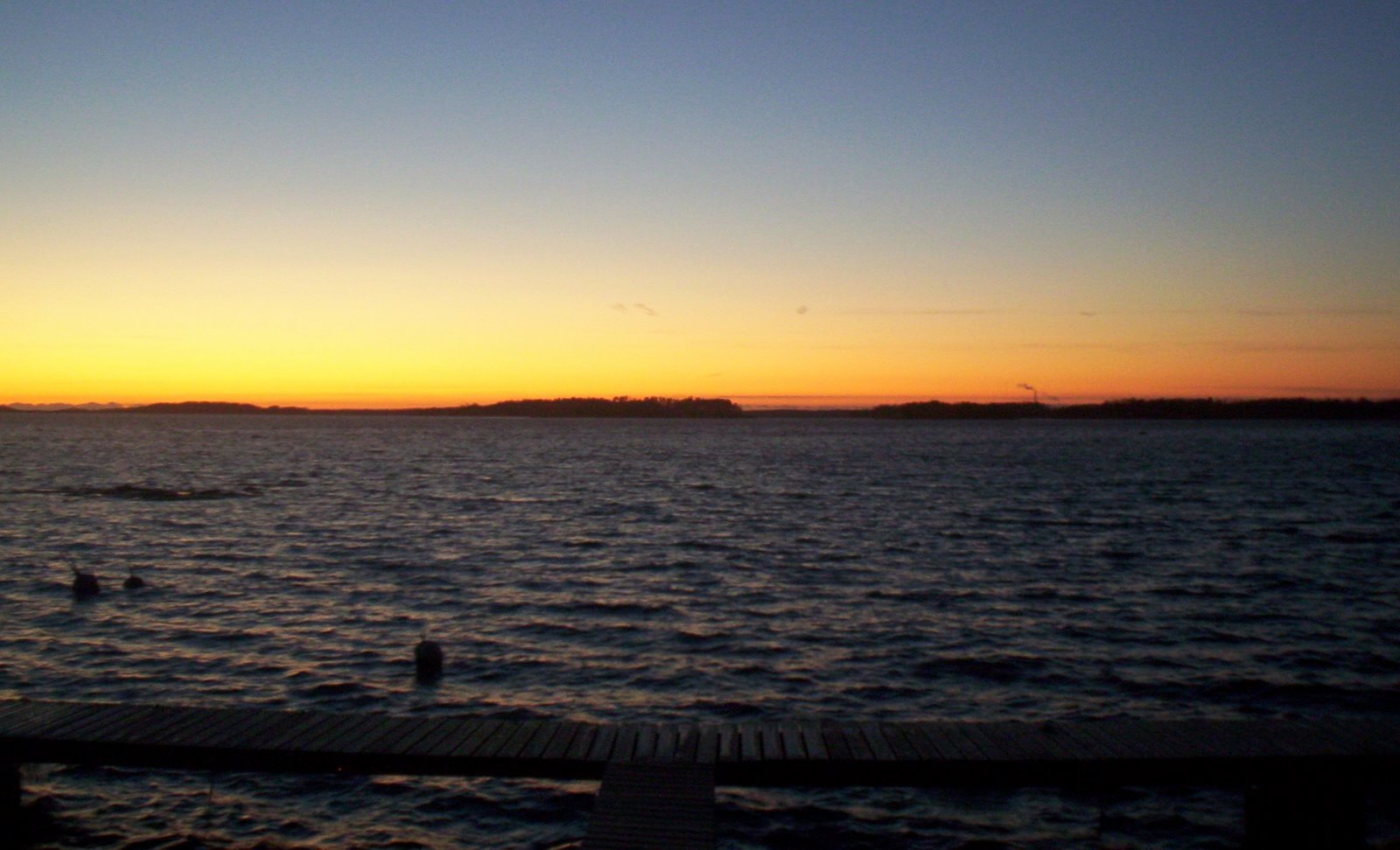
Another sunset


Hey, remember this? It was taken at 23 -- this is around 1530 at Lauttasaari. I didn't have anything to hold the camera on, and the exposure rate is terrible (around two seconds) for pictures in bad lightning. Also, it doesn't capture the light that well, so I have to adjust them afterward on the computer.

Sigh.

I hope to buy a new one sometime in the very near future. I just have very little knowledge what's important in a great camera. Obviously the amount of pixels is not the only important thing.. ability to take damage would also be important, as I carry it in my backpack. As is the ability to capture light in different conditions. But can somebody help put this up in numbers? Maybe recommend a good camera?


Lauttasaari about 23 hours earlier.

Monday, 30 July 2007

My final text about Harry Potter

The past weekend I finished the last Harry Potter. Don't worry, there are no spoilers in this text.. there is some background information about Voldemort, which should not be hugely important for the plot. However, if you want to stay spoiler-free, please don't continue.

After reading the books I started thinking what set this one apart from other fantasy-series. I'm not a huge fan (I don't think I'm a fan at all, though they were good books), but I did see something worth noticing in how Voldemort was characterized in the books, as opposed to many other Big Evils in other stories (starting from Lord of the Rings and going all the way to other books of the genre from Jonathan Strange & Mr. Norrell to Buffy the Vampire Slayer (of which, I dare say, I am a fan of).

The Thing that really touched me was the origin and characterization of Voldemort. He was not a god, he hadn't done anything extraordinary to get where he was. Even though he was expectationally powerful wizard - and some of it was probably thanks to good genes - he still didn't do anything that anyone else couldn't have. The spells he cast, the reputation he got and the minions he had -- hard work and sacrifice, all of it! He stayed awake during classes in Hogswarts (studied there from his 10th year to his 17th), "networked" with other individuals and secured connections thru his friendships. Of course Voldemort was a psycho, but basically, anyone could have done it.

And this is what I find great. During the series, Voldemort (a name he took himself because his own name was basically very mundane) is seen searching for objects, studying, making traps, trusting people, giving responsibility, punishing failures, manipulating, suffering information deprivation... he's not just sitting on his throne and gloating as his master scheme unfolds. He keeps busy. He delegates. Many times we see him acting and thinking like your normal company CEO. Of course, instead of running international company he's leading a crusade against society... but basically, isn't that pretty much the same thing?

And this is what I love about the books. Voldemort had the same education as everyone else. There was no secret knowledge or selling souls or such like. The whole Harry Potter-story could easily have been told in slashdot-posts; evil CEO, bad program (Sony rootkit, maybe?), department heads and PR, young hackers noticing and exploiting a weakness in the code (HD-DVDs); trying to silence them with lawsuits, pushing forward with the program (DRM in legal mp3-substitutes). Punishments. Some company figureheads get sacrificed, but most don't. Life goes on.

Monday, 23 July 2007

Changes in the blog

§1. The writer of Town of Ponte Corvo noted how my blog would need some colour. I started looking into the possibility and was surprised how much Google had developed the Blogger-template engine since I had last looked at it (about year ago, when I tried to make The Gulag-blog (now in deep hibernation, with all the illustrations broken links) all pretty. It used to be hard work and involved reading through the Blogger-template code and making alternations.
Now it was much easier; the only thing I had to modify in the template were the header-wilth, which didn't click with the new at all well. Even the sidebar - which had to be modified by editing template - can now be worked with using Java(?)-tools. Very easy, very simple.

§2. I checked the tags I have been making the past few weeks. I had been adding new tags like they were last day on sale, which is not very smart - too detailed tags will never get more than two entries in them, and are therefore useless. They are now sorted by categories (TV, Internet, philosophy) that are so wide they should get several entries. "Guest of the Third Reich" is exemption I made in hope that if ever finish it, readers that are solely interested in that should find it easier to check out. In the following weeks I hope to go through my posts from the last two years and tag them as well (only about 70 to go!), hopefully giving them some more value.

§3. I also added links to few (very good) blogs by my associates in the sidepanel. They are all worth looking, provided you are interested of my blog, which might be too strong of an assumption.

What do you think?

Sunset


Taken around 23:00 at my balcony about a week ago. You can't stay up too late - after 2:00 the sun starts to rise up again..

On another topic: Picasa, a service by Google seems to have a rather embarrassing bug; while Blogger and Picasa are both owned by the same company, I can't actually add pictures I have loaded to Picasa to Blogger -- but pictures I load to Blogger are shown as folders in Picasa, and can therefore be shown. To get this picture to you, I had to load it to Picasa here and to Blogger separately here.
Maybe I'm just doing something wrong, but I doubt it.

Saturday, 27 January 2007

Problems with anime

There was a time I watched a lot of anime, but it was a long time ago (three to four years).
I have nothing against anime - japanese language is cool enough, big eyes are ok (inside reasonable limits) and I like the action and culture. So why don't I watch more?

1. Mary Sue and characters. The main character is created as perfect, special^10 and unique. The other characters are very one dimensional, with only one defining characteristic, often accompanied with one hobby (smart, likes chocolate or stuck-up and beautiful).
Often they haven't bothered to create even new characters, but the same characters appear again and again with new names from one serie to another. How many instances can you find for militaristic, beautiful woman with monocle? Or silent little girl with stuffed toy, who never the less is smarter than the adult cast-members? I don't even watch anime and I can recall (if not name) three.

2. The concept is often created first, and everything is filled in later. This sounds good in theory, but in practice it means that "scifi" means "technological" and "fantasy" is "magic". This would be good so far, but when "scifi" is defined "2000 years in the future", you should be able to give some sort of explanation how the world has come to this. Why is it that there are space ships and genetically enchanted soldiers, but cars still run with petrol and are simple enough to fix with hands (Gankutsuou, for example?). This shows that there is no over-compensating idea where the story sets place, but the backstory is created and changes according to its own needs. If you make a scifi-story, and announce it takes place in the future (eg. the technological level was once this), you have to explain how it has developed to THIS. You can't just go "oh, there are spaceships, but otherwise people use horses". Or say that "people have forgotten how to do this". Even then, there is an explanation, and it should not be half-willed "because" or something fast to get on with it.

3. In the beginning of any given story, the storyteller and story listener make a pact; storyteller tells that this is an imaginary story, for example, and during the course of story we shall meet fantasy-elements such as people changing shape. You DON'T make happy-happy story to have a grim-and-gritty ending without giving hints of the turn-to-darker earlier in the story (Fruits Basket). You also don't introduce powerful demon into scifi-story that in itself is a retelling of a book set in the modern times (Gankutsuou (aka. Count of Monte Cristo). And if you do, you should explain where demon comes from (not told).
In anime, you are just expected to accept that "in scifi you do technothings" without thinking too much bout it.

4. Most western stories have a three part structure; characters and world are introduced, second part about things going wrong (crisis) and third part where the problem is solved. This can be world-saving, character-building story (soulless hero learns the values of feelings) or even just a story where something is established (you can or can not change destiny).
Many anime's break this. They introduce the characters (see my complaints about world above). Big hidden evil is maybe established. And then happy-go-lucky till the last episode where the evil dies with little to no effort (Rune sword).
There might be even something to show how to story goes; for example, in Inuyasha the heroes are given shards to collect. When the shards are collected, the story ends or shifts its focus. Instead, the shards are reshattered again and again, with the goal going farther and farther. At least in Dragonball the scattering is not seen as failure.

These are not problems only shown in anime; for example, old american superhero comics show similar disregard to these points. The difference is that the audience was pre-teen boys who were not expected to read every issue of the storyline. In anime, every episode can be expected to be seen, and not every show is targeted to pre-teen boys, though, I admit that they do have their own segment.

So, what do I want?
I want the story set in a world that doesn't rise questions about internal logic. Trigun succeeded in this by explaining that it was not our world, and much was lost on the enterprise to get there.
I want the characters to have faults. That not every hero is superspecial Vampire that can walk in the sun (Bloody Trinity) or have ability others lack (Angel Arm in Trigun) or be powerful half-demons (Inuyasha, Vampire hunter D) or have demons caged inside your belly (Naruto).
I want the characters to be original. That they aren't just pure archetypes that have been established the past 20 years as working well enough. The protagonist is nearly always geekish boy/man/boyman with problems with women. The women can, with few expections, be categorized into five archetypes, with no new qualities.
And I want stories that look like they are the right length.

I have this theory that many of the problems arise from the fact that the executives who ok the projects don't want to take risks... and perceive any changes from the fear that change of the status quo would somehow limit the amount of people who will watch the show. Why change winning formula?

I'm not saying all the anime are bad. But this is what I always fear when I start to watch new show. Will this something new, or something old with new package?
I do like School Rumble. I would like to watch more anime that has similar joy of living in it, but that does not mean that I want to see the same characters.. Anime is, after all, so expensive to make that would think it would be used to make something new and exiting, not only old and tried.

Monday, 26 December 2005

Ajasta (about time)

Wrote this at IRC-Galleria, short translation to follow this longish message (if you cant understand, trust me, you dont lose anything), also I might add some more material if I feel like it, to the english version;

Ja Doctor Who Christmas Invasion tuli katottua. Oli jännä. Tässä sitä kattelin 900 mhz:n koneella, ja nykitti niin että piti kattoa isot mustat palkit ympärillä. Tuli mieleen että hyvä että kotona on ainakin kunnon kone nyt, ei olisi vanha 600 mhz enää tätä pyörittäny, ei edes palkkien kanssa.

DW:tä katellessa tuli mieleen, kuinka aika muuttuu. Sarjahan on siis pyörinyt päälle neljäkymmentä vuotta telkkarissa, ja pyörii siis aikamatkustuksen ympärillä (mm.). Katellessa tuli mieleen että tulevaisuus on nyt. Enkä tarkoita edes sillä "vanhat scifisarjat sijoittu aina meidän aikaa" fiiliksellä, vaan yleisesti siten, että moni uneksittu ja villi asia on nyt arkipäivää tai jopa vanhanaikaista. Tai muuten vain kadonnutta. Menneinä vuosikymmeninä ihminen hallitsi säätä, pystyi lopettamaan sairauden kuin sairauden parilla ruiskeella ja kaikkeen oli olemassa ratkaisu. Ja nyt, vuosikymmeniä myöhemmin, sääkontrollista ei puhuta (luin jostain että hurrikaanin pyyhkiminen tai sateen luominen häiritsi pienemmässä mittakaavassa säätä suuremmalla alueella, josta naapurivaltiot eivät tykänneet), bakteerit ovat saaneet immuniteetin (ja aina on vielä HIV) ja DDT oli sitten huippumyrkyllinen jne.
Nyt on esim. bluetooth-kuulokkeita, näköpuhelimia (jota elisa taas vaihteeksi markkinoi, eikös tää ollu tulossa langallisena seiskytluvulla? Jetsonit..) ja mitä kaikkea.

Mutta toisaalta; emmekö me aina elä tulevaisuutta? Uudet high-tech (tai sellaisena myytävät) tuotteet muotoillaan ja markkinoidaan aina tulevaisuutena. Jos automuotoilua katsoo, niin ne ovat kaikki tulevaisuutta, 20-luvulta eteenpäin. Mennyttä tulevaisuutta. Aina teollisesta vallankumouksesta lähtien. Joskus tuntuu että kaikki hieno on jo takana. Kaikkein fantastisimmat rakennukset tehtiin 60-luvulla, ja silloin oli kaikki (ainakin hypen mukaan) hienoa.

Mutta ei kaupungeista koskaan tule sellaisia futuristisia ihannepaikkoja kuin scifissä. Onnistuin äsken jopa selittämään itselleni miksi. Scifissä kaikki on aina uutta, kaikki kiiltää ja on uutuuden karheaa. Todellisuudessa uusi muuttuu normaaliksi ja kuluneeksi hyvin nopeasti, ja jokaista "tulevaisuuden taloa" kohti kaupunki on täynnä vanhoja taloja menneiltä vuosikymmeniltä. Tarvittaisiin sota, joka tuhoaisi koko kaupungin, ennenkuin tulevaisuuden kaupunki voitaisiin rakentaa. Se on ainoa tapa rakentaa kaupunki joka on selkeästi yhdeltä vuosikymmeneltä (tai tietenkin perustaa uusi kaupunki; kuinka usein kaupunkeja vain perustetaan? Ainakin Suomessa ne vain tulevat jostain ja jossain vaiheessa valtuuston puheenjohtaja sitten sanoo että "täs ois sit kaupunki valmiina".) Joku Berliini toisen suuren jäljiltä voisi olla jotain joka näytti, ainakin hetken, yhden vuosikymmenen lapselta.. tai kenties Hong Kong, missä historiaa ei ole varaa säilyttää, ja hallinto pitää huolen että sentimentaalismi ei saa kamaa museorekisteriin, jos sellaista ylipäänsä on olemassa.

Ajattomuutta on paljon helpompi etsiä. Tiedäthän, sitä ajatonta kaupunkia? Menneiden aikojen Pariisia, jossa kaikki ei välttämättä ole uutta, mutta aina kaunista, ja ihmisillä on aina aikaa kävellä kaduilla, jotka kimaltelevat auringossa, viime öisen sateen jäljiltä... Joskus kun kävelen Keravalla, Tapiolassa tai Helsingin keskustassa, voin melkein nähdä sen. Ajattomuuden ja kauneuden. Kuinka kaupunki on täydellinen Juuri Niinkuin Se On. Ja sitte huomaa kuinka rakennus jos toinenkin on peruskorjauksen tarpeessa, eivätkä kadutkaan ole ihan sitä mitä ne voisi olla.


I watched Doctor Who Christmas Invasion. Was pretty nifty, and got me thinking. About future, and more specifictly, how we are living it, right now. And I dont mean like "all the old scifi was situationed to our time". No, I mean technology. Jetsons, apart of the flying car (they stopped developing that after it became imminent that state would want you to have licence for four-engine aeroplane to be allowed to fly, even thought computers make it only slighty more difficult than normal cardriving) are modern day. Sometimes, we are even forward in the curve. Video-conversations thru mobilephones are of this day (thought they probaply cost an arm and an leg, and only CEOs of big companies can afford them), as are handsfree bluetooth-gadgets (worth mentioning because every selfrespecting scifi has them, starting from Star Wars and Star Trek) and really powerful homecomputers, that double as television sets (also items of every science story worth its money). Robots arent there yet, but give it a few more years. I hear they have gotten the AI to the level of five year old.

But then, is not future always now? Sure, we have all the stuff mentioned above, but much has been lost. Weather Control is also something in every scifi, as is the fact that diseases are either all extinct or easy to take care of, no matter what. All mastery of nature. We lost that during the way. We could take care of huricanes, but the big-level, short-area distortion was changed into small-level, big-area distortion, and it usually went over countryborders; neighbors didnt like taking part of your problems... the dream of diseases vanished with developing resistance of bacteries, and with HIV. And mastery of nature vanished with DDT. And cars, they are always of the future, by their design. A cool, streamlined Ferrari looks futuristic now... but no less futuristic than the model of -61, or -34. It's just a different future. I tried to google something definite on the subject, and found this. Fascinating stuff, eh?

Sometimes, when I watch classic movies from the fifties, I actually feel that that time was more of the future than is today. Think of it; the future is over.. And one reason one gets this feeling, is that the movies concentrate around buildings that were then brand new. Still rough around the edges. The reason why no modern city cant reach that standard, is that the cities only renew themselves one building at a time. The time to update each and every building (worth changing) takes so much time that the style between the first building and the last building makes them of different style again. And even thought they would be of the same style, the first ones would be quite worn by the time the last ones would be finished; and where would people live if the change would be done all-at-once (and where to find the people to do the labour?). There should be a war, or a brand new town established, for the city to look about of the same time period. Also, future never arrives without bugs, of the technical kind. Modern solutions are often untried, and engineers and architechs and try to crasp the now. On the subject; I miss bathtub. I havent lived in an apartment with bathtub since I was six, and used an small movable one last when I was about ten. Bathtubs arent modern no more, bathrooms are build with showers instead, and even buildings WITH bathtubs are repaired, and the tubs removed (suddenly I ache for an b-tub).

Something to go to, and wait for, instead of city of the future, is, perhabs, an city without time. To be tied to certain time, is to be limited by the limitations and customs of that timeperiod; either there are no vaccines, or hot water, or no bathtubes... or perhaps its impossible to get clothes or shoes in certain size because you vary too much from the average? A timeless city, would have no such limitations. It is Paris of dreams, where everything is romantically, and curiously, at the same futuristic and old (but with vaccines, bathtubes and horsecarts (without shit on streets). And while that Paris dosen't exist, and truly, there exists no city like that, sometime, for a brief moment, sometimes even day or two, it might be your hometown. The consist rush hour might vanish, and the clouds of pollution might disapear; and sun might bring light down just SO, making everything look new and glorious (partly thanks to the rain during the night, that stopped just before you woke up). And birds sing, and you can actually hear it because there are no cars or other machinery going nearby. You feel like you could dance yourself... have you felt ever like that? Like everything is perfect? That must be, surely, what heaven is all about. Maybe its as close as we ever get.

OK, if you can read both finnish and english, you will find these texts to be quite different in nature. Lucky you. For those who cant; be content that it talks mostly about the same things, with some different variations and points.

BTW, Happy Christmas and Merry new year - or was it the other way around?

Saturday, 17 December 2005

Comicbook logic!

Comics are a great thing. There are several reasons, and one of the most coolest thing about particular brand of them is the continity. Yes, Im talking about superheros.

Continity - that is, things from past storylines affect the future ones - is a cool thing. Sometimes it also causes problems. Things are made for one particular storyline, that become obvious hinderstones in later ones. Or some machine (usually weapon) has some really obvious beneficial uses, but the heroes (even if they have resources, and even if they themselves are in need of the beneficial use) never get around doing it.

The most obvious examble, of course, is Professor Charles Xavier, the founder of X-Men. As you might remember from the movies (in case you dont read comics), the man is a cripple; he moves around while sitting in a wheelchair. This is quite strange, while we remember that the man teaches and houses people of great healing power under his roof. Several times, these healers have been shown to cure battlewounds that would cause death inside minutes; mending bones, removing holes thru the stomach and what have you. And still, Xavier has not asked, nor has of the healers suggested, that Xavier himself could be healed.

Or Cyclops. The man can shoot conclusive rays from his eyes (eg. he shoot beams that have the same effect as by being hit by cannonball). Thanks to brain damage as a kid, he can never turn his rays "off", and therefore he has to use visor that makes his rays harmless when not fighting people. He could be healed, as detailed above, but there are other solutions. X-Men have fought villains, and sometime they have lost. And the villain has chosen to imprison them by using "Inhibitor Collars". In short, it makes using superpowers impossible; shorts them out. They are well tested - in Marvel Universe, there were a whole islandnation full of mutants who were made to use them - so research in the technology is well betatested, and quite safe for users. So, why hasn't some company reverse-engineered the technology and built, for examble, bracelets with on/off switch? Cyclops wouldn't need those glasses, Rogue could touch people without taking their memories and so on. And thats just in the X-Men. Worldwide, there must be thousands, if not hundred of thousands, who look pretty normal and would like the comfort of knowing they dont accidentally, say, level a house. And people whose powers make normal life impossible. Naturally, it wouldnt help always, but it would help SOMETIMES. And even if the bracelet would cost tens of thousands of euros... goverment might help with the fees (it would limit damage to buildings), and even if it wouldnt - how much would you pay for item that would let you touch people without killing them? It should cost very much indeed that I wouldnt get one. There are loans, you know, and item like this would probaply have lifetime waranty.

Other things well known in Marvel U, but not used by anyone outside hero/villain community: time machine (with "ghost mode", where you can observe past but not affect it - ideal christmas present for any archeologist or historian!), alien civilisations with very advanced technolgoies and benevolent mindset (eg. ready to share, not trying to invade), Asimovian robots, force fields, 3D-technology, VERY advanced computers, flying cars, get-superpowers machines (several, most quite safe for the user) and so on. Seeing as some superheroes and villains are also involved in business, not seeing these things in the market is quite amazing (Fantastic four is financed by patents, Iron Man and Iron Fist own tech companies, Black Panther is the head of state, X-Men has several millionares and company owners and Batman is one of the richest people in the world).

Then there are those very absurd things, such as in DC's Flash. One of the villains is Dr. Alchemy. "Ha Ha Ha! After years and years of research, I have finally invented the Alchemist's Stone! With it I can change any material into another! Let's go rob some banks, instead of making copper, silver, iron, platinum, aluminium or some other very valuable and/or rare metal that is used in machines!" And of course, the men who just happen to discover how to make power armours, freeze guns, stilt legs (allowing you to rise to hundreds of meters, while keeping your legs on the ground), power sources and what have you. They could make millions if they started selling their inventions instead of trying to rob the bank down the street!

Oh, and it is shown that Batman's company, Wayne Enterprises, had in the middle eighties a machine that allowed people with broken backs to walk again. Problem was, back then the machine weighted 20 kilos or more, and must have been used all the time. It was 20 years ago, and surely the tech has evolved. And/or, Batman could have pushed more money in the technology, seeing as his friend, former Batgirl and current hacker and manager of Batman's information, happens to suffer from just this condition. Pretty indifrent, isin't he?

While, obviously, some of these things may have violent uses, and some heroes may want to keep their heads out of the workings of humankind - such as Superman - I cant really see why Iron Man, who owns a high tech company with army contracs, would hesitate to put into the market such things as 3D-projector (seeing as he wants to develope the company more to the high tech, consumer market). And time machines (which cant be used in Marvel U to change present) could and should be owned by at least several universities, however ridiculously expensive they were.

So many heroes could help so many more people than they do, if they just would think a moment more of the technology they smash and broke in every issue of their comic books. Sure, they are malevolent, but cant the underlining technology (and applications of physics) be used for GOOD? And why wont villains, that are are shown to be only concerned with money (and not say, world domination) sell or licence their patents instead of robbing banks?

But of course, these are comic books. But some technology could be incorporated into the the universe without making it look very foreign from our own; and that which cant could easily be explained away. But they dont do either, and this makes the heroes look very stupid indeed. Even if some of them are Nobel-winning scientists or supergeniuses.