Reviews.
Published something at kvaak.fi. Check if you can read Finnish.
Also: I finally get to write something to Sarja-info, something I have been hoping and treading for two years now!

Published something at kvaak.fi. Check if you can read Finnish.
Also: I finally get to write something to Sarja-info, something I have been hoping and treading for two years now!
In the blog Town of Ponte Corvo the writer asked me to write a summary of the book Guest of the Third Reich, written by Olavi Paavolainen in the mid-30s. I have not read the book, so the task would be impossible to do. However, I can translate an article on the subject, which hopefully does the same thing.
This was written for Helsingin Sanomat back when the book was originally published in 1936, by Lauri Viljanen. The newspaper has the review online. I shortened some parts where he starts talking too closely about Paavolainen's masterful use of words (he actually sometimes disregarded content in favour of style at parts) and on one occasion actually stops the review in middle to mention he has visited the place himself. Anyway, onwards;
OLAVI PAAVOLAINEN: GUEST OF THE THIRD REICH
”The distancing of youngsters, even children, from their parents and transforming them into crowds as well as the poor, even disrespectful status of women by Scandinavian standards are phenomenons to which the author's modern training in psychological observation fixates in warning.” - Lauri Viljanen, Helsingin Sanomat 13.12.1936
Continuing from the earlier post (see below). Probaply spoils stuff, but not too trastically, I hope. I might spoil pretty badly part of the man/god riddle, so beware. The books should be interesting even after reading this, though. Pattern is mostly an inbetween book. In Shadow, Poldarn gets the first clues of his identity, and in Pattern goes back to the house where he grew up; and finds out what kind of person he is. Because while memories are gone, the man under those memories is mostly intact. Pattern wasn't as good as Shadow; few times I actually had problems carrying on. My friend said he had tried to read this aswell, but couldnt keep on going.
Memory is better, and starts three years after Poldarn found himself at battlefield without clue to his identity. He has more or less found out what kind of person he is, and isint really that enthuastic in reclaiming his memory anymore. He works at a foundry, helping in casting bells for churches.
Then things start to roll. An old schoolmate finds Poldarn, wanting to - if not reclaim his memory, at least telling him the story of his life. But should he trust the man? He is not the first one who claims to know his past -- but previously, people have always lied. And then military seizes control of the foundry. They would be making something never seen in the world before - Poldarn's Flutes, huge metal tubes that shoot fire and rocks.
And while Poldarn is working in the project, he starts to remember the dreams that plague his night... and closing to Poldarn, is the man known as Monach. Like Poldarn, Monach dreams, and in his dreams, he sees the past, the present and - maybe - the future.
It is said that when the god known as Poldarn comes to earth, he dosen't know who he is, but travels from city to city in a cart, doom following. And there are things that Poldarn is said to do in his travels. And nothing can kill a god; only when Poldarn has driven thru the whole world in his cart, and sees himself coming back from the other direction, can he die. And then the world ends.
Story after story, the man Poldarn has filled. But it has all been accidents, mostly in the realms of possible. To the very end the reader has to guess is he man or god... and the solution dosen't hit like lighting bolt from the sky.
The most interesting part of the story is maybe when in the first book Monach comes to Cien investigating Poldarn, and finds an old man who claims he witnessed the god returning people back to life. He back his story very well, and even has something on the line of proof going for him, and so certain magic is backed to the character of Poldarn. In book two, Poldarn is killing ravens, and for a minute he meets, in the foggy fields, a young guy he teaches how to kill ravens. And in the book three; Poldarn remembers how as a young man, he met someone who clearly was not from this world... something divine. These few pages are the only ones that clearly go out of ordinary. Poldarn also gets few dreams about future, but they are easy enough to explain away.
I would recommend you at least browsing the books thru, if you find them in Library. They might be somewhat slow at times, but completly orginal. And books like that dont happen in Fantasy that often.
 This was actually one of the two animes I have bothered to watch during - say, the last two years (not counting my eternal love, Rose of Versailles [should write about that too, someday]).
School Rumble is a school comedy, in the heart of which there is cute girl named Tenma, who acts and appears like she would be several years younger than her age would presume; she is pretty bad with school and not the sharpest pen in the box anyway.
The other main character is the school's toughest tough guy, Hajima. The series starts at the beginning of the school year; Hajima returns to school only to be near Tenma, who he loves from his heart. He, like Tenma, is not very bright; for a thought guy, he has a big heart, but people cant see it because he is also quite violent by nature, and fears for his imago (and enemies, who would surely attack him if they would see him going soft). Hajima is also exellent artist, and now and then during the series we see peeks to his manga, which revolves around him getting Tenma as his girlfriend (naturally, the manga has happy ending).
Tenma, too, is in love, but to a guy who can only see... food. Therefore, the two main plots is Hajima trying to propose to Tenma, and Tenma trying to propose to her heart's desire, Karasuma. Karasuma, too, is a character of suprising qualities. All in all, of all the characters, he seems to be most out of this world. Excelling in everything he bothers doing, he dosen't seem to have much social contacts - maybe he is simply unable to creating them.
Along with Hajima, Tenma and Karasuma, the casts consists of most of the class they are going to, 2C. Each of them seems to have qualities not really expected from normal people, or even of anime thats basicly a love story. Tenma's little sister can read minds; class president (in love with Tenma's sister) is also karateka, one of Tenma's classmates is (apparently) half-Swedish, and has problems with her family she seldom sees... and so on.
But the thing that really makes School Rumble orginal is how drastically the genre of the story changes; Dragonball, Initial D, sports, horror... all such and more the story sifts to, and often, only afterwards the viewer gets to know, was it all a dream, or did it really happen? The characters, particulary Hajima, go to the very extreme to get what they want or forget it -- such as becoming a holy man who talks to animals, channeling their wisdom to those who want to know the future. Other particular thing that suprised me was how jokes of the moment, that don't really have any part in the plot carry on and on, while other stories would simply disregard them. Like the holy man sketch; it only lasts five minutes, and the animals are only part of the background, making the joke to work. But few episodes later half the episode is used to tell what happens to the giraffe that Hajima had earlier.
The anime was very refreshing experience. Usually Im bothered by the ammount of cliches these series use, seemingly without noticing. School Rumble avoids most of them, and when it dosent, it gives such twist that you cant help but enjoy. This is, surely, one of the best series I have ever seen. It would, thought, be even better if the show would have definite ending. Now Hajima only finishes his manga, which gives him some small comfort before going after Tenma again; Tenma, though, dosent seem to understand its over now. After the texts, she starts telling about what happens in episode 27 - without realising this was the very last one.
We can only hope that someday there will be OVA or second season. One would really wish to know how the story finally ends. Apparently there is a manga too, but what hope do we have of ever reading it in english (or in any other language I understand?). Chances also are, that the manga hasnt found it conclusion yet either.
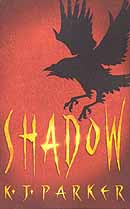

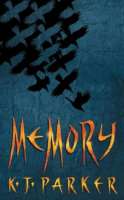
"Suppose there was a really bad man, a truly evil man who did terrible things; and one day he can't remember who he is or what he's done [...] suppose you can get rid of the past so it no longer exists. After all, the past is just memories. Suppose you can wipe them all out, wash them away like a stain in a shirt, so even you don't know any more. There's no past, just present and the future. And the bad man's not bad anymore, is he?"
-Pattern, page 353 (paperback, UK edition)
I found the first book in the library good week ago. It interested me mostly because of the red colour and the lone crow profile in the picture. The backside didn't really do it for me - the first part was good enough, which I quote now;
A man wakes in the wilderness, amid scattered corpses and inquisitive crows. He has no memory of who he is or how he came to be there. The only clues to his former existence lie in his apparent skill with a sword and the fragmented dreams that permeate his sleep. The second half, though,is mostly about how to make the book seem cooler than it is (leading the reader to expect something other than the book really gives), but most books in the market do that, so you have to give some kudos for the first half being good enough. In this text, I will probaply spoil the first hundred pages of the first book (because reviews are about telling about the book, without telling the sollution; and I feel that hundred pages is the ammount of pages you have to read before you can say if book is good or bad; it is also the ammount of pages you feel can be spoiled and most people will forgive you).
You can't tell much about the books, because the first book (and the second (which I'm halfway thru now) seems to continue the trend) is about a mystery. Who the man is? He sees dreams, but he always forgets them when he wakes, leaving reader with a clue of the identity, while the man himself forgets again.
The first book takes place in an unnamed Empire, which dosent have a name because it's so big, and there's only one of them anyway. Long ago, the Empire was strong, but now its getting ever weaker. The provinces far from the center are rebelling, and the generals who are send to put it down declare themselves kings instead. But while the Empire is getting smaller, it is by no means small. While provinces far off are drifting, the center itself is under attack from the sea; the raiders come out of nowhere, destroying whole cities leaving no person alive. And on addition to the raiders and renegade generals (and those still loyal to the Emperor), there are mercenary armies, that change sides with the wind.
The reader is given several options who the man without memory, calling himself Poldarn (name found from an old tile), could be. Maybe he is just a soldier - he seems pretty good with the sword, and several people in that trade seem to know him - only to get killed before sharing that information. Maybe he is even a general, several great ones have been missing for a while... or even a prince, sent to stop a rebellion.
Poldarn tries to make himself a living by attaching himself to a con-artist, who goes from town to town pretending Poldarn is a god in a cart, and she her priestess, cheating farmers out of their food and valuables. Seems pretty good plan...
But Poldarn is a name belonging not only to a tile or to a man with no memory; there is also a god by that name, who is said to manifest in flesh before the end of the world. And it is said, that this god, he will be traveling from city to city, bringing death after him...
The book does not directly handle magic. I feel this is important to mention, because this is definetly a fantasy book, and fantasy books usually have magic in them.. sometimes, them having magic is one of the selling points of the whole story. Magic sword, spells, dragons...nothing like that in this book, no sir. There are things that can be atributed to it, but on the other hand, that magic can also be great skill or lucky accident. Nothing definetly out of possible happens or is seen; and so the reader is thrown from one theory to the next.
The books are not that action packed; true, the first book is pretty dramatic, and has fighting, but the second one is mostly about farming (at least till now). I cant say much about the third book, which is still a work for the future. You could probaply read the first book without reading the next two. The center mystery (who Poldarn is) is answered, and also pretty definite clues why everyone knew him. But much is left unsaid, hence the next two books. I will go into them later on.
The first book is definelty worth reading, it is quite unlike what you have previously read, I can quarantee it.
I started watching this when the new season came out (was it last January?). I also watched the 2003 USA-movie, the intended pilot for new series (that didnt become anything). Because this series is so cool, Im gonna do fast summary about it:
The Doctor ("Who" is only in the title, the character itself is just "Doctor") is near-immortal alien, part of race that call themselves the timelords - thanks to their technology that allows them to travel in space and time, instantly. The series is old - the first episodes came out in the early 60s, and the show was on telly till late 80s, when it was shelved, waiting for better days. They tried to revive the show earlier, as I told, with USA-headed telly-series, but the revisions the americans did to the show, werent really that popular (they made Doctor half-human, for examble).
The idea of the series is pretty simple, there are companions, humans from different timeperiods, that the Doctor has taken fancy off, and invites to adventure on his ship, called the TARDIS (whose camo-shield has been permanently stuckt on "police box", as they looked on 60s at Britain). Trhu the eyes of the companions (which switch regulary), is the show seen, with Doctor explaining strange occurences.
Doctor has several "arch-enemies", like fellow timelord who calls himself "The Master", and has devoted his time to become Emperor. Other enemies include the near-invincible robots, the Daleks, that look really sinister with their "EXTERMINATE!" shouts with robotic voices and appearance that mostly brings to mind big pepper-springlers.
While Doctor is more or less immortal, with lifespan counted in thousands of years, he can die; but as timelord he has another trick up his sleeve; he can return from death, up to 11 times before 12th death is final. But there's a catch - while his body regenerates, his appearance and personality changes, sometimes even dramatically. The Doctor has now died nine times and his tenth life is starting up. At this time, he has been old and wise, aristocratic, somewhat sinister and calculating, and "few cards short of the whole deck". On producting point, this ability was developed to allow new actors take the role of Doctor without having to explain the change of appearance. At the same time, the very possible change of real death keeps the viewer on the edge of the seat. It is not unknown for both the Doctor and his human companions to die during some particulary wild adventure...
But about all else, "Doctor Who" is a show of exitement, jokes, sense of mystery and good time. Not that many months ago, "Doctor Who" was voted as the #1 cult-series of all time - over Star Trek, X-Files and many others.
This was the first Tarantino movie I had seen. Sure, I had seen movies and telly-shows with Tarantino as guest-director, but this was his movie. He wrote it, he directed it, he even acted in it.
It was somehow wierd, for Hollywood flick. Sure, there were lots of graphic, heavy violence. But where you normally in Hollywood flicks got these action packed chapters that last for minutes, Tarantino makes the violence fast - lots of talking, anger builds, shot in the head (or in the gut, as you will), and its over. And then the camera scrolls over the wounds.
Somehow, the music was so well chosen. When Surf Rider (the last song) starts playing, and Travolta and Jackson walk to the diner door, put the guns inside their pants and walk out, and the text starts to scroll... its so cool. Even though both had ridiculous hairstyles. Were those guys SERIOUS with them?
The links in this article lead to Wikipedia (English).
Terry Goodkind is American fantasy author. His story's main character is Richard Cypher, who lives in continent divided to three parts; in the western part (his home) there is no magic; this part is also mostly forrest and smallest of the three; people hunt and have small villages and some sort of council, but thats it. The middle part is much bigger, with kingdoms, magic and magical creatures and such. And to the east there is one more area, which is one huge kingdom ruled by Lord Rahl.
The parts are divided by barriers, which now come crashing down. Lord Rahl attacks the Midlands, and the Spokesperson of the Council of Midlands (that has representative of the kingdoms), the Mother Confessor, goes to West to found the First Wizard, who left Midlands years ago. Only he would appoint a new Seeker of Truth. With Seeker and the First Wizard, maybe Midlands could fight back...
Richard Cypher gets to be the Seeker. With Mother Confessor and the First Wizard, he travels thru the continent. Lord Darkhen Rahl is trying to find the Boxes of Orken, which would, with proper rites, make him the ultimate ruler - indeed, the God - of the world. One of the boxes must be secured until one year has passed - thats the timelimit to Rahl to do the rites, if he fails he will die.
The first books are really interesting, and I kept my nose deep in the books till I had them read. While the writing wasnt exactly superb, they had this spirit of joy in them. You usually knew what happened next, but that didnt stop the books from being fun.
Each of the books is more or less stand-alone. Darkhen Rahl meets his fate in the first book, and the next book starts immediately after, by revealing the new threat to be solved. This works pretty well.
Then happens so that Mr. Goodkind finds Ayn Rand's books Atlas Shrugged and the philosophy of Objectivism*. He is so deeply taken by the idea that he has to corporate them into his own books. And so he has to start doing retcons, usually pretty bad ones. In the end this leads to the point where Richard, in the beginning of the series pretty blue-eyed "let's help people", "killing and slaving people is wrong" and "there is more than one truth", becomes very like how Lord Rahl is potrayed. [ Though the writer himself dosent apparently realize this ]
I stopped reading in the book eight, Naked Empire, where Richard finds a large valley where people live in undeveloped community. They have houses, they farm, have cattle, but they tactics are primitive, making, for examble, houses with two or more floors impossible. The people used to be really happy. While most people have their own house for privacy, they prefer to sleep together in big barracks, to streghten the community. Everything important is shared, owned by community. Everyone is happy, no one is violent. This changes as the "villain of the week" has found the valley and promptly went on to make the people there their subjects. The subjects dont rebel; they believe that if they do what they are asked to do, maybe the bad men go away. Even the deaths and rapes of their wives and children are not enough to make them forsake their peaceful philosophy.
Richard finds the valley, promptly agitates several people to rise arms. In one scene, he and his men attack the building where the enemy is hiding. However, the villain has sinister tactic; instead of attacking (he knew Richard was coming), he has alerted the locals of the coming attack. They promptly make signs and make human chain that circles the building. They shout stuff like "KILLING IS WRONG!" "DONT DO WAR!" and so on. The enemy soldiers keep their swords in their sheats, as Richard attacks. Seeing how the locals dont step aside, he orders his men (family and neighbors of the protestors) to kill the demonstrators, which they do (cos Richard has magnetic personality).
All in all, the last books are more and more manifests for the case of Objectivism; Richard might stop to make speeches that are nearly ten pages long; someone counted that nearly half of the book eight is such speeches.
However, the first books are really interesting reads, and while not that well written, they have energy that might make them worth your while. Book six is clearly affected by the philosophy, but Richard still goes and finds more or less peaceful way to solve the problems; later he just kills everyone who dosent see the the world like he does. Because only he is right; and if others dont see it, they are wrong and have done their choice and deserve death.
*In case you are not interested in the Wikipedia link, all that needs to be said is that the philosophy is "each for themselves, and screw the others". You cant depend on other people, and neither should you depend on others; that makes the dependant weak, and will never grow strong. While Rand has a point, her view is hard and offers no compromise. The philosophy dosent recongize "helping the other back on its feet".
Last time I was so deeply tied to explain what Belgariad, its sequels and other books of Eddings are, that I forgot why I actually wrote that message.
As I said, I had read Belgariad and Mallorean just before, to remind me of how good I had once taken them as (when 13 years old, now 21).
First: While the Light and Dark are said to be equal prophecies, both with as good chance in succeeding, this is never shown. [Mad god] Torak is killed in the end of the first series (no spoiler there, huh?), which is told in the prophecies of Light. BUT THIS IS ALSO EVIDENT IN THE PROPHECIES OF DARK. Seeing as how Belgarath claimed to have read the Dark Prophecies, he completly missed all the references to "after Torak's death..". Yeah, in the sequel the claim that the editions available were edited to claim that he would win, but still.. "edited" means that the prophecy "orginally" said that he would LOSE. So, why the confrontation between Light and Dark, when both parties knew which would lose? That fights against the whole point of the books.
Second, trough the books there are smaller confrontations, where either prophecy can get "points" (what these points are, are never told; apparently they didnt affect to the final confrontation, where third party get to choose the better prophecy). The prophecy of Light never loses; they always win. Also; Dark always loses, save the one time to find the location of Kell.
While Eddings claims that both parties are as powerful, in practice everytime they face each other, Light wins, usually even without any bigger problems.
Just wanted to point this out.
In case someone didn't know (and are still interested), David Eddings is fantasy author, who got to the Golden list with his five-part story Belgariad. The book has been translated to several languages, and spawned the sequel (also five-parter) Mallorean. After Mallorean, he did two trilogies about spellcasting knight, and then some other books (I havent really kept track). Oh, also two (really lenghty) prequels to Belgariad, named Polgara and Belgarath, of two immortal spellcasters.
The idea of Belgariad is as follows. There are two prophecies, two destinies, which are both as probaple. They can exist side by side for some time, but the final result is different; the "good" one is called the Prophecy of Light, while the other one is of Dark. In Belgariad, the Dark Prophecy is embodied in Torak, mad and crippled god (one of the seven creators of the world), who thousands of years ago broke the world with the help of magical stone belonging his brother-god Aldur (hermit by nature). The Prophecy of Life is embodied in Garion, who lived his early life in farm, until his caretaker, Aunt Pol hears of massive tidings in the outside world.
The Stone of Aldur has been taken from the empty Throne Room of Riva. Garion is just 15 years old, and dosent really understand what is going on. Helped by friends and associates collected by his Aunt (really sorceress Polgara, age around 3000 years) and her dad, wizard Belgarath, age around 7000 years, they are going to track the stone and return it to where it was taken. If not reclaimed, the Stone can be used to wake Torak from his sleep, where he has laid over 500 years, after showdown with Guardian of Riva (the caretaker of Rivan throne until a king of the chosen line emerges).
The companions of Garion are, apart from his Aunt and Granpa, the Knight Mandorallen (who is totally without fear, but isin't that smart either), Prince Kheldar (who prefers to be called Silk, and is by profession spy, cheater and thief), Barak (huge viking-like warrior), Hettar (two schimitars wielding man with personal hate against the enemypeople, after seeing his parents being tortured by death and suffering great wounds himself as a child. Can also talk to horses), Ce'Nedra (half-human princess from Tolnedra (which is like Rome) and Durnik (smith from the farm where Garion was raised).
The books rise and fall with witty banter. The story goes forward with snapshots from their treks up-and-down the world, which consists of different nations, each with its own people (usually stereotype of some people in our world) and customs. These are not really important, however. They are just a way to give the characters something to interact with, and to talk of with each other, usually in humorous way. The backgrounds are paper-thin, and sometimes are broken to allow good dialogue go its course.
In the first five books Garion finds his destiny as wizard of great strenght and heir to Rivan Throne (empty for 1000 years), and gets to kill a mad god. The books are mainly situated in the western continent, and stay pretty simple. Not much explanation of the world or its workings are given.
In the sequel, good fifteen or twenty years have passed, and Belgarion (as our protagonist is now called), is secured king of small island, and the Overlord of the whole Western world. Then his kid is kidnapped, and he has to follow the kidnapper trough the whole world to final showdown in hidden place, where the face of the world is finally decided.
The books offer the same as did the first series, but this time the nature of the world is explained more trough-out. Several comments by the narrator are not one-to-one with each other, or with the background of the world. For examble, at one point it is referred to the monkey-like ancestors of Men, though in the setting humankind is created by gods as they are now. Also, the status of enemy-wizards (grolims) as either sub-race of Angaraks (the human race as Torak its god) or as priests from among the Angaraks is not made clear.
In the sequel, as well as in all Eddings "epic" stories I have read, the maincharacters are pretty much the same. One is the dull, but courageous one, one is master thief, the other is old spellcaster eg. They talk the same dialogues, and go the same conversations. It is easy to replace any character with character from other series.
You have to give Dave some credit though.
He's honest. He writes for money, and he dosen't lie about it. This is all well and good, but you should respect your audience.
I first read the books when I was 13 years old. Back then my experiences with fantasy were all either Burroughs or Tolkien, so Eddings was, with his witty and humorous voice welcome change to my reading habits. I read the books on one go, one at a day (400-700 pages each), which now sounds really amazing to me. I also bought the books featuring Garion to myself. Carried and delivered lots of commercials and add-paid newspapers to mailboxes to afford them, too!
Final say in the subject. Belgariad or Althalus (another book, only one part) should be good read from the author. With one story, you don't get too tied up with the mistakes or repeating storylines (in Mallorean, the characters themselves wonder, didn't we do this previously too? It's pretty bad when even the characters notice recurring scenes...). Eddings did bring something new to the genre, but he didnt bother to bring something new to his own writing afterwards. It stays more or less as simple as it did in his first published work, with new names and more powerful way of telling it.
Last week, Marvel finished GLA Misassembled miniseries (four issues), written by Dan Slott and drawn by Paul Pelletier.
The comic is about Great Lake Avengers - a "superteam", whose members powers are either useless or politically incorrect. The team consists of Flatman - who is as thin as paper, Mr. Immortal - who can die but not stay dead, Doorman - who can teleport stuff about two meters trough his "black hole" body, Dinah Soar, who looks like some flying dinosaur (and can fly, but not talk), and Big Bertha - really goodlooking anorectic woman, who has the ability to become superstrong (and superfat) superhero. She disposes her weight by thowing up. Works as supermodel in her civilian identity.
The story centers around quest for new members. You see, GLA members have this annoying habit of dying (Mr. Immortal dosent count). So they need to recry new members. But everyone knows GLA, and nobody wants to join. The second tread of the story is about Mr. Immortal, and why he cant die (they illustrate his suicide attempts really well).
The comic is all about humour. The first issue is about the history of Mr. Immortal and GLA, the second issue is for the quest for new members, third issue is about the villain attack, and in number four it all ties back together.
The comic is fun - nothing is funnier that squirrel named "Monkey Joe" giving good tips for life ("Friends dont let friends play the Magnolia soundtrack", "please dont do what you see Mr. Immortal doing in this issue.."). On the other hand, its also sad - the GLA members are really sympathic punch, and when the comic is about destroying the team... Good reading, though.
Its different from Giffen/DeMatteis JLA-stories, to whose fans this comic was obviously intented, considering the logo-design, and nearly equally good with the best of JLA-stories of the era. Expect, of course, this is more sad, and dosent potrait always the heroes in so positive light as JLA did (they were, after all, the premiere superteam of their world).
Recommended.

